
Acupuncture vs. Integrative Dry Needling: Understanding the Differences
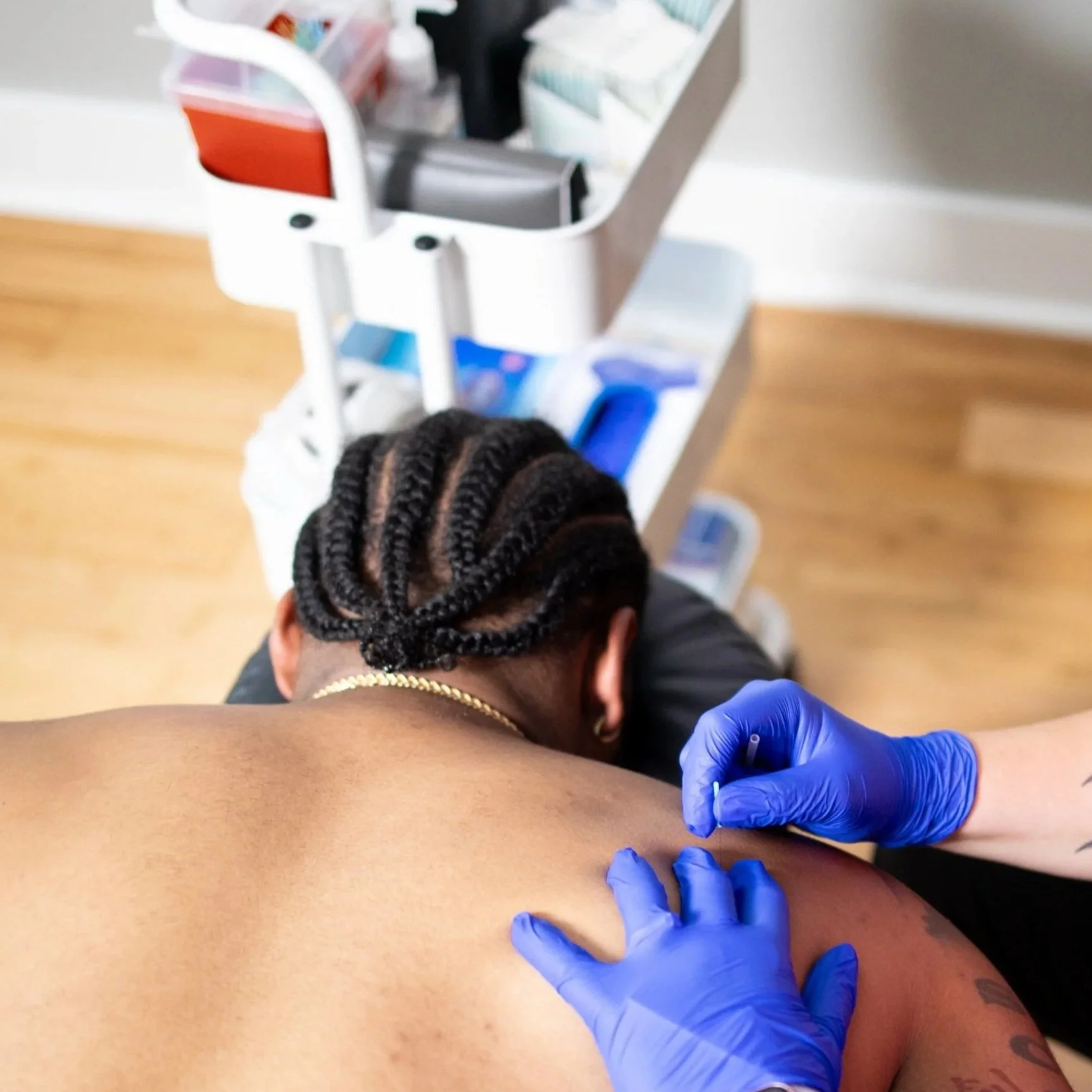
At first glance, acupuncture and integrative dry needling may look almost identical. Both involve the use of very thin, solid filiform needles that are inserted into the body. Neither therapy uses medication or injections—hence the term “dry” needling. Both can help people manage pain, release tight muscles, improve mobility, and promote overall healing. In fact, many patients who experience one often ask whether they’ve just had the other.
The similarities go beyond the tool itself. Both approaches:
Aim to stimulate the body’s natural healing responses.
Can influence the nervous system, helping regulate pain signals and muscle tension.
Are increasingly found in integrative healthcare settings, where Eastern and Western medicine overlap.
Can be tailored to the individual—whether addressing chronic headaches, low back pain, or recovery after sports injury.
Despite these commonalities, the two practices are guided by very different philosophies and histories, and are delivered by different types of practitioners. To understand the distinction, it helps to look at where each one comes from.
A Brief History
Acupuncture has its roots in ancient China, with written records dating back more than 2,000 years. Classic texts like The Yellow Emperor’s Inner Canon describe how health depends on the balance and flow of qi (vital energy) through pathways called meridians. Over centuries, practitioners identified hundreds of acupoints mapped along these meridians, each believed to influence specific body regions and organ systems. Acupuncture spread across Asia and eventually the world, becoming one of the best-known forms of traditional medicine.
Dry needling, by contrast, is a relatively modern practice. Emerging in the mid-20th century, it was influenced by the work of Dr. Janet Travell and Dr. David Simons, who pioneered the concept of myofascial trigger points—tight, tender spots within muscles that can cause pain locally or in referred areas. In the last few decades, physical therapists and other providers have adapted dry needling into an integrative approach, blending trigger point theory with modern anatomy, neurology, and rehabilitation science. Unlike acupuncture, it does not use the meridian system, but instead targets muscles, tendons, ligaments, and connective tissues based on biomechanical and clinical evaluation.
How Acupuncture Views the Body
Acupuncture is rooted in traditional Chinese medicine (TCM), a system of healing that has been practiced for thousands of years. In this framework:
The body is seen as an interconnected system of channels called meridians, which carry qi (vital energy).
Acupoints are located along these meridians. Each point is believed to correspond not just to a physical location but also to the function of an organ system or broader body region.
For example:
LI4 (Hegu) on the hand is thought to influence headaches and face pain.
ST36 (Zusanli) on the leg is used to support digestion and energy.
PC6 (Neiguan) on the wrist may help with nausea and calming the nervous system.
The big picture: acupuncture points aren’t chosen because of tight muscles or knots, but because they connect to these larger systems of energy flow.
How Integrative Dry Needling Differs
Integrative dry needling, often used in physical therapy, comes from a different perspective:
It’s based on Western medicine and anatomy rather than meridians.
Needles are placed in trigger points, muscles, or connective tissue that show signs of tension, restricted mobility, or inflammation.
The goal is to create a small, controlled irritation that stimulates the body’s natural healing response: improved blood flow, reduced muscle tightness, and pain relief.
For example, if someone has shoulder pain, a therapist may target specific muscles in the rotator cuff or surrounding areas rather than selecting points on a meridian tied to “liver” or “stomach” energy.
Comparing the Two
Acupuncture: Guided by energy meridians, holistic in nature, points can be located far away from the painful area.
Integrative Dry Needling: Guided by anatomy and physiology, local to the pain or dysfunction, based on modern medical models.
Shared ground: Both use thin needles, both aim to reduce pain and improve function, and both can be part of an integrative treatment plan.
Which One Is Right for You?
There’s no one-size-fits-all answer. Some patients prefer the holistic, time-tested approach of acupuncture, while others benefit more from the targeted, musculoskeletal focus of integrative dry needling. Many find value in combining both approaches within their overall care.
At Wildflower Physical Therapy & Wellness in Indianapolis, we specialize in integrative dry needling as part of a personalized physical therapy plan. Our goal is to help you move better, recover faster, and get back to the activities you love—whether that’s work, sports, or everyday life.
👉 Curious if dry needling could help you? Contact us today to schedule a consultation and learn how our approach can support your recovery and long-term wellness.
If you are struggling with illness or injury and would like to get your body moving, schedule a physical therapy appointment with us today! At Wildflower Physical Therapy & Wellness, we can help you to get back to the life you want to live through pain management strategies, activity promotion and exercise. Our Cash Based Physical Therapy model allows us to deliver a highly individualized treatment plan without the fuss of insurance companies. Interested in trying dry needling to support your exercise routine and maximize recovery? Reach out to us today!